AI Chatbot Kajian Tindakan

AI Chatbot Kajian Tindakan — independent reviews, comparisons, pricing and step-by-step guides on Aizhi.

  • Parasolid

    Parasolid

    Parasolid is a geometric modeling kernel originally developed by Shape Data Limited, now owned and developed by Siemens Digital Industries Software. It can be licensed by other companies for use in their 3D computer graphics software products. Parasolid's abilities include model creation and editing utilities such as Boolean modeling operators, feature modeling support, advanced surfacing, thickening and hollowing, blending and filleting, and sheet modeling. It also incorporates modeling with mesh surfaces and lattices. Parasolid also includes tools for direct model editing, including tapering, offsetting, geometry replacement and removing feature details with automated regeneration of surrounding data. Parasolid also provides wide-ranging graphical and rendering support, including hidden-line, wireframe and drafting, tessellation, and model data inquiries. To use Parasolid effectively, software developers need knowledge of CAD in general, computational geometry, and topology. Parasolid is available for Windows (32-bit, 64-bit and AArch64), Linux (64-bit and AArch64), macOS (Apple silicon and Intel), iOS, and Android. == Parasolid XT format == Parasolid parts are normally saved in XT format, which usually has the file extension .X_T. The format is documented and open. There is also a binary version of the format, usually with an .X_B extension, which is somewhat more compact. Both .X_T and .X_B are used for parts files. == Applications == It is used in many computer-aided design (CAD), computer-aided manufacturing (CAM), computer-aided engineering (CAE), product visualization, and CAD data exchange packages. Notable uses include:

    Read more →
  • Multimodal representation learning

    Multimodal representation learning

    Multimodal representation learning is a subfield of representation learning focused on integrating and interpreting information from different modalities, such as text, images, audio, or video, by projecting them into a shared latent space. This allows for semantically similar content across modalities to be mapped to nearby points within that space, facilitating a unified understanding of diverse data types. By automatically learning meaningful features from each modality and capturing their inter-modal relationships, multimodal representation learning enables a unified representation that enhances performance in cross-media analysis tasks such as video classification, event detection, and sentiment analysis. It also supports cross-modal retrieval and translation, including image captioning, video description, and text-to-image synthesis. == Motivation == The primary motivations for multimodal representation learning arise from the inherent nature of real-world data and the limitations of unimodal approaches. Since multimodal data offers complementary and supplementary information about an object or event from different perspectives, it is more informative than relying on a single modality. A key motivation is to narrow the heterogeneity gap that exists between different modalities by projecting their features into a shared semantic subspace. This allows semantically similar content across modalities to be represented by similar vectors, facilitating the understanding of relationships and correlations between them. Multimodal representation learning aims to leverage the unique information provided by each modality to achieve a more comprehensive and accurate understanding of concepts. These unified representations are crucial for improving performance in various cross-media analysis tasks such as video classification, event detection, and sentiment analysis. They also enable cross-modal retrieval, allowing users to search and retrieve content across different modalities. Additionally, it facilitates cross-modal translation, where information can be converted from one modality to another, as seen in applications like image captioning and text-to-image synthesis. The abundance of ubiquitous multimodal data in real-world applications, including understudied areas like healthcare, finance, and human-computer interaction (HCI), further motivates the development of effective multimodal representation learning techniques. == Approaches and methods == === Canonical-correlation analysis based methods === Canonical-correlation analysis (CCA) was first introduced in 1936 by Harold Hotelling and is a fundamental approach for multimodal learning. CCA aims to find linear relationships between two sets of variables. Given two data matrices X ∈ R n × p {\displaystyle X\in \mathbb {R} ^{n\times p}} and Y ∈ R n × q {\displaystyle Y\in \mathbb {R} ^{n\times q}} representing different modalities, CCA finds projection vectors w x ∈ R p {\displaystyle w_{x}\in \mathbb {R} ^{p}} and w y ∈ R q {\displaystyle w_{y}\in \mathbb {R} ^{q}} that maximizes the correlation between the projected variables: ρ = max w x , w y w x ⊤ Σ x y w y w x ⊤ Σ x x w x w y ⊤ Σ y y w y {\displaystyle \rho =\max _{w_{x},w_{y}}{\frac {w_{x}^{\top }\Sigma _{xy}w_{y}}{{\sqrt {w_{x}^{\top }\Sigma _{xx}w_{x}}}{\sqrt {w_{y}^{\top }\Sigma _{yy}w_{y}}}}}} such that Σ x x {\displaystyle \Sigma _{xx}} and Σ y y {\displaystyle \Sigma _{yy}} are the within-modality covariance matrices, and Σ x y {\displaystyle \Sigma _{xy}} is the between-modality covariance matrix. However, standard CCA is limited by its linearity, which led to the development of nonlinear extensions, such as kernel CCA and deep CCA. ==== Kernel CCA ==== Kernel canonical correlation analysis (KCCA) extends traditional CCA to capture nonlinear relationships between modalities by implicitly mapping the data into high dimensional feature spaces using kernel functions. Given kernel functions K x {\displaystyle K_{x}} and K y {\displaystyle K_{y}} with corresponding Gram matrices K x ∈ R n × n {\displaystyle K_{x}\in \mathbb {R} ^{n\times n}} and K y ∈ R n × n {\displaystyle K_{y}\in \mathbb {R} ^{n\times n}} , KCCA seeks coefficients α {\displaystyle \alpha } and β {\displaystyle \beta } that maximize: ρ = max α , β α ⊤ K x K y β α ⊤ K x 2 α β ⊤ K y 2 β {\displaystyle \rho =\max _{\alpha ,\beta }{\frac {\alpha ^{\top }K_{x}Ky\beta }{{\sqrt {\alpha ^{\top }K_{x}^{2}\alpha }}{\sqrt {\beta ^{\top }K_{y}^{2}\beta }}}}} To prevent overfitting, regularization terms are typically added, resulting in: ρ = max α , β α T K x K y β α T ( K x 2 + λ x K x ) α β T ( K y 2 + λ y K y ) β {\displaystyle \rho =\max _{\alpha ,\beta }{\frac {\alpha ^{T}K_{x}K_{y}\beta }{{\sqrt {\alpha ^{T}\left(K_{x}^{2}+\lambda _{x}K_{x}\right)\alpha }}{\sqrt {\;\beta ^{T}\left(K_{y}^{2}+\lambda _{y}K_{y}\right)\beta }}}}} where λ x {\displaystyle \lambda _{x}} and λ y {\displaystyle \lambda _{y}} are regularization parameters. KCCA has proven effective for tasks such as cross-modal retrieval and semantic analysis, though it faces computational challenges with large datasets due to its O ( n 2 ) {\displaystyle O(n^{2})} memory requirement for sorting kernel matrices. KCCA was proposed independently by several researchers. ==== Deep CCA ==== Deep canonical correlation analysis (DCCA), introduced in 2013, employs neural networks to learn nonlinear transformations for maximizing the correlation between modalities. DCCA uses separate neural networks f x {\displaystyle f_{x}} and f y {\displaystyle f_{y}} for each modality to transform the original data before applying CCA: max W x , W y , θ x , θ y corr ⁡ ( f x ( X ; θ x ) , f y ( Y ; θ y ) ) {\displaystyle \max _{W_{x},W_{y},\theta _{x},\theta _{y}}\operatorname {corr} \left(f_{x}(X;\theta _{x}),f_{y}(Y;\theta _{y})\right)} where θ x {\displaystyle \theta _{x}} and θ y {\displaystyle \theta _{y}} represent the parameters of the neural networks, and W x {\displaystyle W_{x}} and W y {\displaystyle W_{y}} are the CCA projection matrices. The correlation objective is computed as: corr ⁡ ( H x , H y ) = tr ⁡ ( T − 1 / 2 H x T H y S − 1 / 2 ) {\displaystyle \operatorname {corr} (H_{x},H_{y})=\operatorname {tr} \left(T^{-1/2}H_{x}^{T}H_{y}S^{-1/2}\right)} where H x = f x ( X ) {\displaystyle H_{x}=f_{x}(X)} and H y = f y ( Y ) {\displaystyle H_{y}=f_{y}(Y)} are the network outputs, T = H x T H x + r x I {\displaystyle T=H_{x}^{T}H_{x}+r_{x}I} , S = H y T H y + r y I {\displaystyle S=H_{y}^{T}H_{y}+r_{y}I} and r x , r y {\displaystyle r_{x},r_{y}} are the regularization parameters. DCCA overcomes the limitations of linear CCA and kernel CCA by learning complex nonlinear relationships while maintaining computational efficiency for large datasets through mini-batch optimization. === Graph-based methods === Graph-based approaches for multimodal representation learning leverage graph structure to model relationships between entities across different modalities. These methods typically represent each modality as a graph and then learn embedding that preserve cross-modal similarities, enabling more effective joint representation of heterogeneous data. One such method is cross-modal graph neural networks (CMGNNs) that extend traditional graph neural networks (GNNs) to handle data from multiple modalities by constructing graphs that capture both intra-modal and inter-modal relationships. These networks model interactions across modalities by representing them as nodes and their relationships as edges. Other graph-based methods include Probabilistic Graphical Models (PGMs) such as deep belief networks (DBN) and deep Boltzmann machines (DBM). These models can learn a joint representation across modalities, for instance, a multimodal DBN achieves this by adding a shared restricted Boltzmann Machine (RBM) hidden layer on top of modality-specific DBNs. Additionally, the structure of data in some domains like Human-Computer Interaction (HCI), such as the view hierarchy of app screens, can potentially be modeled using graph-like structures. The field of graph representation learning is also relevant, with ongoing progress in developing evaluation benchmarks. === Diffusion maps === Another set of methods relevant to multimodal representation learning are based on diffusion maps and their extensions to handle multiple modalities. ==== Multi-view diffusion maps ==== Multi-view diffusion maps address the challenge of achieving multi-view dimensionality reduction by effectively utilizing the availability of multiple views to extract a coherent low-dimensional representation of the data. The core idea is to exploit both the intrinsic relations within each view and the mutual relations between the different views, defining a cross-view model where a random walk process implicitly hops between objects in different views. A multi-view kernel matrix is constructed by combining these relations, defining a cross-view diffusion process and associ

    Read more →
  • Dataset shift

    Dataset shift

    Dataset shift is a phenomenon in machine learning and statistics in which the joint distribution of input variables and target labels is different in the training phase and the deployment or test phase (i.e., P t r a i n ( X , Y ) ≠ P t e s t ( X , Y ) {\displaystyle P_{train}(X,Y)\neq P_{test}(X,Y)} ). This happens when the statistical properties of data used to train a model are no longer representative of the data encountered in real-world use, often resulting in degraded predictive performance and diminished generalization ability. Dataset shift is a generic term for a number of particular types of distributional change. Covariate shift is when the distribution of the input features changes, but the conditional relationship between inputs and outputs remains constant . Prior probability shift (or label shift) happens when the distribution of target labels changes, but the conditional distribution of inputs given labels stays the same. Concept shift (also known as concept drift) is the change of the conditional relationship between inputs and outputs that renders previously learned patterns invalid over time. A key challenge for deploying machine learning systems is dataset shift, in particular in dynamic environments where the data distributions change over time. Detecting and mitigating such shifts is an active area of research, e.g., drift detection, domain adaptation, continual learning.

    Read more →
  • Eager learning

    Eager learning

    In artificial intelligence, eager learning is a learning method in which the system tries to construct a general, input-independent target function during training of the system, as opposed to lazy learning, where generalization beyond the training data is delayed until a query is made to the system. The main advantage gained in employing an eager learning method, such as an artificial neural network, is that the target function will be approximated globally during training, thus requiring much less space than using a lazy learning system. Eager learning systems also deal much better with noise in the training data. Eager learning is an example of offline learning, in which post-training queries to the system have no effect on the system itself, and thus the same query to the system will always produce the same result. The main disadvantage with eager learning is that it is generally unable to provide good local approximations in the target function.

    Read more →
  • Bayesian programming

    Bayesian programming

    Bayesian programming is a formalism and a methodology for having a technique to specify probabilistic models and solve problems when less than the necessary information is available. Edwin T. Jaynes proposed that probability could be considered as an alternative and an extension of logic for rational reasoning with incomplete and uncertain information. In his founding book Probability Theory: The Logic of Science he developed this theory and proposed what he called "the robot," which was not a physical device, but an inference engine to automate probabilistic reasoning—a kind of Prolog for probability instead of logic. Bayesian programming is a formal and concrete implementation of this "robot". Bayesian programming may also be seen as an algebraic formalism to specify graphical models such as, for instance, Bayesian networks, dynamic Bayesian networks, Kalman filters or hidden Markov models. Indeed, Bayesian programming is more general than Bayesian networks and has a power of expression equivalent to probabilistic factor graphs. == Formalism == A Bayesian program is a means of specifying a family of probability distributions. The constituent elements of a Bayesian program are presented below: Program { Description { Specification ( π ) { Variables Decomposition Forms Identification (based on δ ) Question {\displaystyle {\text{Program}}{\begin{cases}{\text{Description}}{\begin{cases}{\text{Specification}}(\pi ){\begin{cases}{\text{Variables}}\\{\text{Decomposition}}\\{\text{Forms}}\\\end{cases}}\\{\text{Identification (based on }}\delta )\end{cases}}\\{\text{Question}}\end{cases}}} A program is constructed from a description and a question. A description is constructed using some specification ( π {\displaystyle \pi } ) as given by the programmer and an identification or learning process for the parameters not completely specified by the specification, using a data set ( δ {\displaystyle \delta } ). A specification is constructed from a set of pertinent variables, a decomposition and a set of forms. Forms are either parametric forms or questions to other Bayesian programs. A question specifies which probability distribution has to be computed. === Description === The purpose of a description is to specify an effective method of computing a joint probability distribution on a set of variables { X 1 , X 2 , ⋯ , X N } {\displaystyle \left\{X_{1},X_{2},\cdots ,X_{N}\right\}} given a set of experimental data δ {\displaystyle \delta } and some specification π {\displaystyle \pi } . This joint distribution is denoted as: P ( X 1 ∧ X 2 ∧ ⋯ ∧ X N ∣ δ ∧ π ) {\displaystyle P\left(X_{1}\wedge X_{2}\wedge \cdots \wedge X_{N}\mid \delta \wedge \pi \right)} . To specify preliminary knowledge π {\displaystyle \pi } , the programmer must undertake the following: Define the set of relevant variables { X 1 , X 2 , ⋯ , X N } {\displaystyle \left\{X_{1},X_{2},\cdots ,X_{N}\right\}} on which the joint distribution is defined. Decompose the joint distribution (break it into relevant independent or conditional probabilities). Define the forms of each of the distributions (e.g., for each variable, one of the list of probability distributions). ==== Decomposition ==== Given a partition of { X 1 , X 2 , … , X N } {\displaystyle \left\{X_{1},X_{2},\ldots ,X_{N}\right\}} containing K {\displaystyle K} subsets, K {\displaystyle K} variables are defined L 1 , ⋯ , L K {\displaystyle L_{1},\cdots ,L_{K}} , each corresponding to one of these subsets. Each variable L k {\displaystyle L_{k}} is obtained as the conjunction of the variables { X k 1 , X k 2 , ⋯ } {\displaystyle \left\{X_{k_{1}},X_{k_{2}},\cdots \right\}} belonging to the k t h {\displaystyle k^{th}} subset. Recursive application of Bayes' theorem leads to: P ( X 1 ∧ X 2 ∧ ⋯ ∧ X N ∣ δ ∧ π ) = P ( L 1 ∧ ⋯ ∧ L K ∣ δ ∧ π ) = P ( L 1 ∣ δ ∧ π ) × P ( L 2 ∣ L 1 ∧ δ ∧ π ) × ⋯ × P ( L K ∣ L K − 1 ∧ ⋯ ∧ L 1 ∧ δ ∧ π ) {\displaystyle {\begin{aligned}&P\left(X_{1}\wedge X_{2}\wedge \cdots \wedge X_{N}\mid \delta \wedge \pi \right)\\={}&P\left(L_{1}\wedge \cdots \wedge L_{K}\mid \delta \wedge \pi \right)\\={}&P\left(L_{1}\mid \delta \wedge \pi \right)\times P\left(L_{2}\mid L_{1}\wedge \delta \wedge \pi \right)\times \cdots \times P\left(L_{K}\mid L_{K-1}\wedge \cdots \wedge L_{1}\wedge \delta \wedge \pi \right)\end{aligned}}} Conditional independence hypotheses then allow further simplifications. A conditional independence hypothesis for variable L k {\displaystyle L_{k}} is defined by choosing some variable X n {\displaystyle X_{n}} among the variables appearing in the conjunction L k − 1 ∧ ⋯ ∧ L 2 ∧ L 1 {\displaystyle L_{k-1}\wedge \cdots \wedge L_{2}\wedge L_{1}} , labelling R k {\displaystyle R_{k}} as the conjunction of these chosen variables and setting: P ( L k ∣ L k − 1 ∧ ⋯ ∧ L 1 ∧ δ ∧ π ) = P ( L k ∣ R k ∧ δ ∧ π ) {\displaystyle P\left(L_{k}\mid L_{k-1}\wedge \cdots \wedge L_{1}\wedge \delta \wedge \pi \right)=P\left(L_{k}\mid R_{k}\wedge \delta \wedge \pi \right)} We then obtain: P ( X 1 ∧ X 2 ∧ ⋯ ∧ X N ∣ δ ∧ π ) = P ( L 1 ∣ δ ∧ π ) × P ( L 2 ∣ R 2 ∧ δ ∧ π ) × ⋯ × P ( L K ∣ R K ∧ δ ∧ π ) {\displaystyle {\begin{aligned}&P\left(X_{1}\wedge X_{2}\wedge \cdots \wedge X_{N}\mid \delta \wedge \pi \right)\\={}&P\left(L_{1}\mid \delta \wedge \pi \right)\times P\left(L_{2}\mid R_{2}\wedge \delta \wedge \pi \right)\times \cdots \times P\left(L_{K}\mid R_{K}\wedge \delta \wedge \pi \right)\end{aligned}}} Such a simplification of the joint distribution as a product of simpler distributions is called a decomposition, derived using the chain rule. This ensures that each variable appears at the most once on the left of a conditioning bar, which is the necessary and sufficient condition to write mathematically valid decompositions. ==== Forms ==== Each distribution P ( L k ∣ R k ∧ δ ∧ π ) {\displaystyle P\left(L_{k}\mid R_{k}\wedge \delta \wedge \pi \right)} appearing in the product is then associated with either a parametric form (i.e., a function f μ ( L k ) {\displaystyle f_{\mu }\left(L_{k}\right)} ) or a question to another Bayesian program P ( L k ∣ R k ∧ δ ∧ π ) = P ( L ∣ R ∧ δ ^ ∧ π ^ ) {\displaystyle P\left(L_{k}\mid R_{k}\wedge \delta \wedge \pi \right)=P\left(L\mid R\wedge {\widehat {\delta }}\wedge {\widehat {\pi }}\right)} . When it is a form f μ ( L k ) {\displaystyle f_{\mu }\left(L_{k}\right)} , in general, μ {\displaystyle \mu } is a vector of parameters that may depend on R k {\displaystyle R_{k}} or δ {\displaystyle \delta } or both. Learning takes place when some of these parameters are computed using the data set δ {\displaystyle \delta } . An important feature of Bayesian programming is this capacity to use questions to other Bayesian programs as components of the definition of a new Bayesian program. P ( L k ∣ R k ∧ δ ∧ π ) {\displaystyle P\left(L_{k}\mid R_{k}\wedge \delta \wedge \pi \right)} is obtained by some inferences done by another Bayesian program defined by the specifications π ^ {\displaystyle {\widehat {\pi }}} and the data δ ^ {\displaystyle {\widehat {\delta }}} . This is similar to calling a subroutine in classical programming and provides an easy way to build hierarchical models. === Question === Given a description (i.e., P ( X 1 ∧ X 2 ∧ ⋯ ∧ X N ∣ δ ∧ π ) {\displaystyle P\left(X_{1}\wedge X_{2}\wedge \cdots \wedge X_{N}\mid \delta \wedge \pi \right)} ), a question is obtained by partitioning { X 1 , X 2 , ⋯ , X N } {\displaystyle \left\{X_{1},X_{2},\cdots ,X_{N}\right\}} into three sets: the searched variables, the known variables and the free variables. The 3 variables S e a r c h e d {\displaystyle Searched} , K n o w n {\displaystyle Known} and F r e e {\displaystyle Free} are defined as the conjunction of the variables belonging to these sets. A question is defined as the set of distributions: P ( S e a r c h e d ∣ Known ∧ δ ∧ π ) {\displaystyle P\left(Searched\mid {\text{Known}}\wedge \delta \wedge \pi \right)} made of many "instantiated questions" as the cardinal of K n o w n {\displaystyle Known} , each instantiated question being the distribution: P ( Searched ∣ Known ∧ δ ∧ π ) {\displaystyle P\left({\text{Searched}}\mid {\text{Known}}\wedge \delta \wedge \pi \right)} === Inference === Given the joint distribution P ( X 1 ∧ X 2 ∧ ⋯ ∧ X N ∣ δ ∧ π ) {\displaystyle P\left(X_{1}\wedge X_{2}\wedge \cdots \wedge X_{N}\mid \delta \wedge \pi \right)} , it is always possible to compute any possible question using the following general inference: P ( Searched ∣ Known ∧ δ ∧ π ) = ∑ Free [ P ( Searched ∧ Free ∣ Known ∧ δ ∧ π ) ] = ∑ Free [ P ( Searched ∧ Free ∧ Known ∣ δ ∧ π ) ] P ( Known ∣ δ ∧ π ) = ∑ Free [ P ( Searched ∧ Free ∧ Known ∣ δ ∧ π ) ] ∑ Free ∧ Searched [ P ( Searched ∧ Free ∧ Known ∣ δ ∧ π ) ] = 1 Z × ∑ Free [ P ( Searched ∧ Free ∧ Known ∣ δ ∧ π ) ] {\displaystyle {\begin{aligned}&P\left({\text{Searched}}\mid {\text{Known}}\wedge \delta \wedge \pi \right)\\={}&\sum _{\text{Free}}\left[P\left({\text{Searched}}\wedge {\text{Free}}\mid {\text{Known}}\wedge \delta \wedge \

    Read more →
  • Agentive logic

    Agentive logic

    Agentive logic (also called the logic of action or logic of agency) is the field of philosophical logic and logic in computer science that studies formal representations of agents, their actions, and their abilities. An agentive logic in the narrower sense is a formal system whose primitive operators express that an agent does something, can do something, or sees to it that something is the case. Agentive logics generalise modal logic by adding modalities indexed to agents and to actions. Typical examples include: STIT logics (from sees to it that) with operators of the form [ i s t i t : φ ] {\displaystyle [i\ {\mathsf {stit}}:\varphi ]} meaning that agent i {\displaystyle i} sees to it that φ {\displaystyle \varphi } holds; dynamic logics of action with program-like modalities [ α ] φ {\displaystyle [\alpha ]\varphi } and ⟨ α ⟩ φ {\displaystyle \langle \alpha \rangle \varphi } meaning, roughly, that after every (respectively, some) execution(s) of action α {\displaystyle \alpha } , φ {\displaystyle \varphi } holds; logics with explicit agentive operators such as "can do", "brings about", or "is able to ensure". Agentive logics are used in action theory in philosophy, in the semantics of natural language, in the theory of program verification, and in artificial intelligence, where they underpin formalisms for reasoning about actions, planning, and intelligent agents. == Terminology and scope == The adjective agentive derives from the Latin agens ("one who acts") and originally referred to the grammatical agent of a verb. In logical contexts it designates operators or predicates whose primary argument position is an agent rather than a proposition alone, for example A i φ {\displaystyle A_{i}\varphi } ("agent i {\displaystyle i} does φ {\displaystyle \varphi } ") or C i φ {\displaystyle C_{i}\varphi } ("agent i {\displaystyle i} can bring about φ {\displaystyle \varphi } "). In contemporary literature, agentive logic is sometimes used narrowly for formal reconstructions of St. Anselm's modal account of facere ("to do"). More broadly, the term is used interchangeably with logic of action or logic of agency to cover a family of modal and dynamic logics designed to capture the structure of action and choice. == Historical background == === Medieval and early modern roots === Medieval logicians already explored analogies between modalities of action and alethic modalities such as possibility and necessity, for instance, in discussions of obligation and power. An influential early agentive analysis is due to St. Anselm (11th century), who treated "doing φ {\displaystyle \varphi } " as a kind of modal operator on propositions, anticipating later modal logics of agency. Modern reconstructions of Anselm's theory show that the resulting "agentive logic" can be modelled with neighbourhood semantics and satisfies a recognisable square of opposition. === Modern logic of action === Modern study of the logic of action began in the mid-20th century, parallel to developments in deontic logic and tense logic. Early systems were proposed by Georg Henrik von Wright, Stig Kanger, and others, often motivated by questions about norms and responsibility. From the 1960s onward, two largely independent but eventually converging traditions emerged: a branching-time tradition, culminating in STIT logics, emphasising agents' choices among possible futures; and dynamic logics of programs and actions, developed within computer science to reason about program execution. In the 1990s and 2000s, action logics were further developed in connection with knowledge representation, planning, and multi-agent systems in AI, and with dynamic and update semantics in linguistics. == Core ideas == Despite their diversity, most agentive logics share some general themes: Agents are treated as explicit indices of modal operators, as in [ i d o e s ] φ {\displaystyle [i\ {\mathsf {does}}]\varphi } or C i φ {\displaystyle C_{i}\varphi } . Actions are represented either implicitly, via changes between possible worlds along an accessibility relation, or explicitly, as terms denoting primitive and composite actions. Choice and ability are captured by modalities describing what an agent can ensure, usually relative to assumptions about the environment and other agents. Formal properties such as closure under composition, interaction between different agents, and connections to obligation (what an agent ought to do) and knowledge (what an agent knows how to do) are investigated. == STIT logics == STIT ("sees to it that") logics, originating in work by Nuel Belnap and collaborators, treat agency in a branching-time framework. A STIT model consists of a partially ordered set of moments with a tree-like structure, sets of histories (maximal branches through the tree), and for each agent at each moment, a partition of the histories through that moment representing the choices available to the agent. Intuitively, an agent's action at a moment determines which equivalence class (choice cell) of histories becomes actual; a formula [ i s t i t : φ ] {\displaystyle [i\ {\mathsf {stit}}:\varphi ]} is true at a history–moment pair if φ {\displaystyle \varphi } holds on all histories in the choice cell corresponding to the agent's current action. Different STIT operators have been distinguished, notably: the Chellas STIT operator, often written [ i c s t i t : φ ] {\displaystyle [i\ {\mathsf {cstit}}:\varphi ]} , which requires only that the agent's choice guarantees φ {\displaystyle \varphi } ; and the deliberative STIT operator, [ i d s t i t : φ ] {\displaystyle [i\ {\mathsf {dstit}}:\varphi ]} , which additionally requires that φ {\displaystyle \varphi } is not already historically necessary. STIT frameworks have been extended with group agency operators, temporal modalities, epistemic operators, and deontic operators to study responsibility, collective action, and obligations under indeterminism. == Dynamic logics of action == Dynamic logic was originally developed to reason about the behaviour of computer programs, treating program execution as a kind of action. In propositional dynamic logic (PDL), action terms α , β , … {\displaystyle \alpha ,\beta ,\dots } denote abstract programs or actions, and formulas of the form [ α ] φ {\displaystyle [\alpha ]\varphi } and ⟨ α ⟩ φ {\displaystyle \langle \alpha \rangle \varphi } express that all, respectively some, terminating executions of α {\displaystyle \alpha } lead to states where φ {\displaystyle \varphi } holds. From the standpoint of agentive logic, dynamic logic provides: a language for building complex actions from primitives via sequencing, choice, and iteration (e.g., α ; β {\displaystyle \alpha ;\beta } , α ∪ β {\displaystyle \alpha \cup \beta } , α ∗ {\displaystyle \alpha ^{}} ); a Kripke semantics in which actions correspond to labelled accessibility relations; and proof systems (such as Hoare logic and weakest precondition calculi) for reasoning about the correctness of action sequences. Extensions such as concurrent dynamic logic add operators for parallel composition, allowing reasoning about interacting processes and concurrent actions. John-Jules Ch. Meyer and others have argued that dynamic logic is a natural base for logics of agents, by adding modalities for knowledge, belief, and ability on top of the action modalities. Dynamic logics have also been applied to normative reasoning, yielding dynamic deontic logics where actions are related to obligations and permissions, and to dynamic epistemic logics in which information-changing actions such as announcements are modelled as programs. == Situation calculus and other action formalisms == In artificial intelligence, reasoning about action and change is often based on first-order languages that explicitly represent situations, events, and fluents (time-varying properties). The best known is situation calculus, introduced by John McCarthy and developed extensively by Raymond Reiter. In such formalisms: action terms name primitive actions; a function symbol (often d o {\displaystyle {\mathsf {do}}} ) maps an action and a situation to a successor situation; and axioms describe which fluents hold in which situations and how actions change them. Reiter's successor state axioms give compact specifications of how each fluent changes under all actions, and precondition axioms specify when actions are possible. Related formalisms include the event calculus and fluent calculus, which provide alternative ways of representing events and their effects. While these systems are often first-order rather than modal, they are closely related to agentive logics: their action terms and transition structures can be seen as providing models for dynamic or STIT-style modalities, and conversely, dynamic logics can be used as abstract specification languages for such AI formalisms. == Ability, agency, and related modalities == Many agentive logics introduce explicit operators for ability or "can-do"

    Read more →
  • Automated medical scribe

    Automated medical scribe

    Automated medical scribes (also called artificial intelligence scribes, AI scribes, digital scribes, virtual scribes, ambient AI scribes, AI documentation assistants, and digital/virtual/smart clinical assistants) are tools for transcribing medical speech, such as patient consultations and dictated medical notes. Many also produce summaries of consultations. Automated medical scribes based on large language models (LLMs, commonly called "AI", short for "artificial intelligence") increased drastically in popularity in 2024. There are privacy and antitrust concerns. Accuracy concerns also exist, and intensify in situations in which tools try to go beyond transcribing and summarizing, and are asked to format information by its meaning, since LLMs do not deal well with meaning (see weak artificial intelligence). Medics using these scribes are generally expected to understand the ethical and legal considerations, and supervise the outputs. The privacy protections of automated medical scribes vary widely. While it is possible to do all the transcription and summarizing locally, with no connection to the internet, most closed-source providers require that data be sent to their own servers over the internet, processed there, and the results sent back (as with digital voice assistants). Some retailers say their tools use zero-knowledge encryption (meaning that the service provider can't access the data). Others explicitly say that they use patient data to train their AIs, or rent or resell it to third parties; the nature of privacy protections used in such situations is unclear, and they are likely not to be fully effective. Most providers have not published any safety or utility data in academic journals, and are not responsive to requests from medical researchers studying their products. == Privacy == Some providers unclear about what happens to user data. Some may sell data to third parties. Some explicitly send user data to for-profit tech companies for secondary purposes, which may not be specified. Some require users to sign consents to such reuse of their data. Some ingest user data to train the software, promising to anonymize it; however, deanonymization may be possible (that is, it may become obvious who the patient is). It is intrinsically impossible to prevent an LLM from correlating its inputs; they work by finding similar patterns across very large data sets. Some information on the patient will be known from other sources (for instance, information that they were injured in an incident on a certain day might be available from the news media; information that they attended specific appointment locations at specific times is probably available to their cellphone provider/apps/data brokers; information about when they had a baby is probably implied by their online shopping records; and they might mention lifestyle changes to their doctor and on a forum or blog). The software may correlate such information with the "anonymized" clinical consultation record, and, asked about the named patient, provide information which they only told their doctor privately. Because a patient's record is all about the same patient, it is all unavoidably linked; in very many cases, medical histories are intrinsically identifiable. Depending on how common a condition and what other data is available, K-anonymity may be useless. Differential privacy could theoretically preserve privacy. Data broker companies like Google, Amazon, Apple and Microsoft have produced or bought up medical scribes, some of which use user data for secondary purposes, which has led to antitrust concerns. Transfer of patient records for AI training has, in the past, prompted legal action. Open-source programs typically do all the transcription locally, on the doctor's own computer. Open-source software is widely used in healthcare, with some national public healthcare bodies holding hack days. === Data resale and commercialization === Several AI medical scribe providers include terms in their service agreements that allow the reuse, sale, or commercialization of de-identified or user-submitted data. Although such data are generally described as anonymized or aggregated, these practices have raised ethical concerns among clinicians and privacy advocates regarding secondary uses of medical information beyond clinical documentation. Freed, an AI transcription and scribe platform, states in its Terms of Use that it may "collect, use, publish, disseminate, sell, transfer, and otherwise exploit" de-identified and aggregated data derived from user inputs. OpenEvidence similarly states that it may "collect, use, transfer, sell, and disclose non-personal information and customer usage data for any purpose including commercial uses." Doximity, which offers an AI-enabled medical scribe as part of its physician platform, grants itself a "nonexclusive, irrevocable, worldwide, perpetual, unlimited, assignable, sublicensable, royalty-free" license to "copy, prepare derivative works from, improve, distribute, publish, ... analyze, index, tag, [and] commercialize" content submitted by users, subject to its privacy policy. Because these terms allow broad secondary use—including sale, licensing, model-training, derivative works, and commercial exploitation of de-identified or user-submitted data—some commentators have recommended that clinicians review data-handling provisions carefully when adopting AI-scribe tools, particularly in clinical environments where patient privacy and regulatory compliance are critical. === Encryption === Multifactor authentication for access to the data is expected practice. Typically, Diffie–Hellman key exchange is used for encryption; this is the standard method commonly used for things like online banking. This encryption is expensive but not impossible to break; it is not generally considered safe against eavesdroppers with the resources of a nation-state. If content is encrypted between the client and the service provider's remote server (transport cryptography), then the server has an unencrypted copy. This is necessary if the data is used by the service provider (for instance, to train the software). Zero-knowledge encryption implies that the only unencrypted copy is at the client, and the server cannot decrypt the data any more easily than a monster-in-the-middle attacker. == Platforms == Scribes may operate on desktops, laptop, or mobile computers, under a variety of operating systems. These vary in their risks; for instance, mobiles can be lost. The underlying mobile or desktop operating systems are also part of the trusted computing base, and if they are not secure, the software relying on them cannot be secure either. Some AI medical scribe platforms are designed to operate as cloud-based applications that generate structured clinical documentation from clinician–patient conversations. These systems may offer features such as real-time transcription, document generation, and integration with electronic health record (EHR) systems. == Confabulation, omissions, and other errors == Like other LLMs, medical-scribe LLMs are prone to hallucinations, where they make up content based on statistically associations between their training data and the transcription audio. LLMs do not distinguish between trying to transcribe the audio and guessing what words will come next, but perform both processes mixed together. They are especially likely to take short silences or non-speech noises and invent some sort of speech to transcribe them as. LLM medical scribes have been known to confabulate racist and otherwise prejudiced content; this is partly because the training datasets of many LLMs contain pseudoscientific texts about medical racism. They may misgender patients. A survey found that most doctors preferred, in principle, that scribes be trained on data reviewed by medical subject experts. Relevant, accurate training data increases the probability of an accurate transcription, but does not guarantee accuracy. Software trained on thousands of real clinical conversations generated transcripts with lower word error rates. Software trained on manually-transcribed training data did better than software trained with automatically transcribed training data such as YouTube captions. Autoscribes omit parts of the conversation classes as irrelevant. The may wrongly classify pertinent information as irrelevant and omit it. They may also confuse historic and current symptoms, or otherwise misclassify information. They may also simply wrongly transcribe the speech, writing something incorrect instead. If clinicians do not carefully check the recording, such mistakes could make their way into their medical records and cause patient harms. == Patient consent == Professional organizations generally require that scribes be used only with patient consent; some bodies may require written consent. Medics must also abide by local surveillance laws, which may criminalize recording pri

    Read more →
  • POP-11

    POP-11

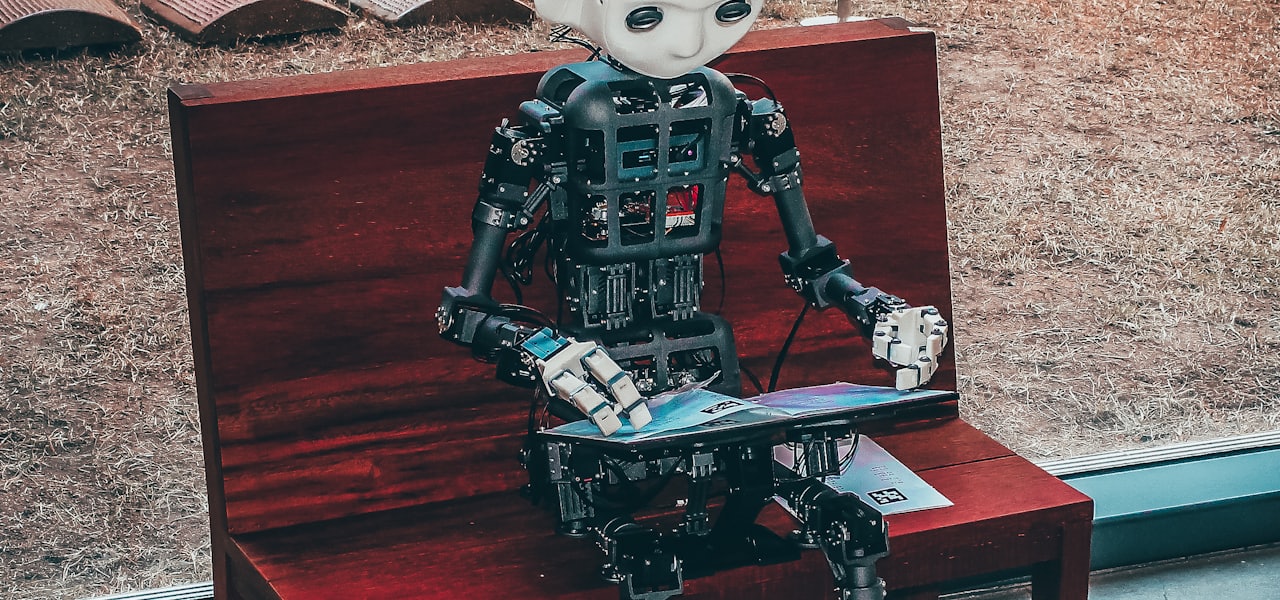
    POP-11 is a reflective, incrementally compiled programming language with many of the features of an interpreted language. It is the core language of the Poplog programming environment developed originally by the University of Sussex, and recently in the School of Computer Science at the University of Birmingham, which hosts the main Poplog website. POP-11 is an evolution of the language POP-2, developed in Edinburgh University, and features an open stack model (like Forth, among others). It is mainly procedural, but supports declarative language constructs, including a pattern matcher, and is mostly used for research and teaching in artificial intelligence, although it has features sufficient for many other classes of problems. It is often used to introduce symbolic programming techniques to programmers of more conventional languages like Pascal, who find POP syntax more familiar than that of Lisp. One of POP-11's features is that it supports first-class functions. POP-11 is the core language of the Poplog system. The availability of the compiler and compiler subroutines at run-time (a requirement for incremental compiling) gives it the ability to support a far wider range of extensions (including run-time extensions, such as adding new data-types) than would be possible using only a macro facility. This made it possible for (optional) incremental compilers to be added for Prolog, Common Lisp and Standard ML, which could be added as required to support either mixed language development or development in the second language without using any POP-11 constructs. This made it possible for Poplog to be used by teachers, researchers, and developers who were interested in only one of the languages. The most successful product developed in POP-11 was the Clementine data mining system, developed by ISL. After SPSS bought ISL, they renamed Clementine to SPSS Modeler and decided to port it to C++ and Java, and eventually succeeded with great effort, and perhaps some loss of the flexibility provided by the use of an AI language. POP-11 was for a time available only as part of an expensive commercial package (Poplog), but since about 1999 it has been freely available as part of the open-source software version of Poplog, including various added packages and teaching libraries. An online version of ELIZA using POP-11 is available at Birmingham. At the University of Sussex, David Young used POP-11 in combination with C and Fortran to develop a suite of teaching and interactive development tools for image processing and vision, and has made them available in the Popvision extension to Poplog. == Simple code examples == Here is an example of a simple POP-11 program: define Double(Source) -> Result; Source2 -> Result; enddefine; Double(123) => That prints out: 246 This one includes some list processing: define RemoveElementsMatching(Element, Source) -> Result; lvars Index; [[% for Index in Source do unless Index = Element or Index matches Element then Index; endunless; endfor; %]] -> Result; enddefine; RemoveElementsMatching("the", [[the cat sat on the mat]]) => ;;; outputs [[cat sat on mat]] RemoveElementsMatching("the", [[the cat] [sat on] the mat]) => ;;; outputs [[the cat] [sat on] mat] RemoveElementsMatching([[= cat]], [[the cat]] is a [[big cat]]) => ;;; outputs [[is a]] Examples using the POP-11 pattern matcher, which makes it relatively easy for students to learn to develop sophisticated list-processing programs without having to treat patterns as tree structures accessed by 'head' and 'tail' functions (CAR and CDR in Lisp), can be found in the online introductory tutorial. The matcher is at the heart of the SimAgent (sim_agent) toolkit. Some of the powerful features of the toolkit, such as linking pattern variables to inline code variables, would have been very difficult to implement without the incremental compiler facilities.

    Read more →
  • Standard test image

    Standard test image

    A standard test image is a digital image file used across different institutions to test image processing and image compression algorithms. By using the same standard test images, different labs are able to compare results, both visually and quantitatively. The images are in many cases chosen to represent natural or typical images that a class of processing techniques would need to deal with. Other test images are chosen because they present a range of challenges to image reconstruction algorithms, such as the reproduction of fine detail and textures, sharp transitions and edges, and uniform regions. == Historical origins == Test images as transmission system calibration material probably date back to the original Paris to Lyon pantelegraph link. Analogue fax equipment (and photographic equipment for the printing trade) were the largest user groups of the standardized image for calibration technology until the coming of television and digital image transmission systems. == Common test image resolutions == The standard resolution of the images is usually 512×512 or 720×576. Most of these images are available as TIFF files from the University of Southern California's Signal and Image Processing Institute. Kodak has released 768×512 images, available as PNGs, that was originally on Photo CD with higher resolution, that are widely used for comparing image compression techniques.

    Read more →
  • Enterprise cognitive system

    Enterprise cognitive system

    Enterprise cognitive systems (ECS) are part of a broader shift in computing, from a programmatic to a probabilistic approach, called cognitive computing. An Enterprise Cognitive System makes a new class of complex decision support problems computable, where the business context is ambiguous, multi-faceted, and fast-evolving, and what to do in such a situation is usually assessed today by the business user. An ECS is designed to synthesize a business context and link it to the desired outcome. It recommends evidence-based actions to help the end-user achieve the desired outcome. It does so by finding past situations similar to the current situation, and extracting the repeated actions that best influence the desired outcome. While general-purpose cognitive systems can be used for different outputs, prescriptive, suggestive, instructive, or simply entertaining, an enterprise cognitive system is focused on action, not insight, to help in assessing what to do in a complex situation. == Key characteristics == ECS have to be: Adaptive: They must learn as information changes, and as goals and requirements evolve. They must resolve ambiguity and tolerate unpredictability. They must be engineered to feed on dynamic data in real time, or near real time. In the Enterprise, near-real time learning from data requires an agile information federation approach to ingest incremental data updates as they occur, and an unsupervised learning approach to ensure that new best practice is leveraged across the organization in a timely manner. Interactive: They must interact easily with users so that those users can define their needs comfortably. They may also interact with other processors, devices, and Cloud services, as well as with people. In the Enterprise, interactions are controlled via existing workflows and UIs. Therefore, embedding best practices directly into these existing interfaces, in the context of a specific step, is critical to ensure maximum end-user adoption. Iterative and stateful: They must aid in defining a problem by asking questions or finding additional source input if a problem statement is ambiguous or incomplete. They must “remember” previous interactions in a process and return information that is suitable for the specific application at that point in time. In the Enterprise, business context is often structured by a business process, and therefore sufficiently data-rich to make relevant recommendations without significant iterations from the end-user. A stateful memory of overall interactions across communication channels is critical for understanding of context, as a static profile will not capture intent and outcome potential the way behavior does. Contextual: They must understand, identify, and extract contextual elements such as meaning, syntax, time, location, appropriate domain, regulations, user's profile, process, task and goal. They may draw on multiple sources of information, including both structured and unstructured digital information, as well as sensory inputs (visual, gestural, auditory, or sensor-provided). In the Enterprise, Context is fragmented and must be aggregated across data types, sources, and locations. In most business environments, such data is captured in existing enterprise information systems, and the effort is linked to quickly source and unify such information. It is rare to have to directly process sensor, audio or visual data in real-time as direct input into the enterprise cognitive system. Instead, these data types are captured by Enterprise Applications and pre-processed into a binary or text format prior to consumption by the System. == Business applications powered by an ECS == Bottlenose – trends and brands monitoring Cybereason – security threat monitoring Dataminr – social media monitoring

    Read more →
  • Superintelligence ban

    Superintelligence ban

    Superintelligence ban refers to proposed legal, ethical, or policy measures intended to restrict or prohibit the development of artificial superintelligence, AI systems that would surpass human cognitive abilities in nearly all domains. The idea arises from concerns that such systems could become uncontrollable, potentially posing existential threats to humanity or causing severe social and economic disruption. == Background == The concept of limiting or banning superintelligence research has roots in early 21st-century debates on artificial general intelligence (AGI) safety. Thinkers such as Nick Bostrom and Eliezer Yudkowsky warned that self-improving AI could rapidly exceed human oversight. As advanced models like large-scale language models and autonomous agents began demonstrating complex reasoning abilities, policymakers and ethicists increasingly discussed the need for legal constraints on the creation of systems capable of recursive self-improvement. In October 2025, the Future of Life Institute published a statement calling for "a prohibition on the development of superintelligence, not lifted before there is broad scientific consensus that it will be done safely and controllably, and strong public buy-in." This statement was signed by various public personalities, such as Richard Branson and Steve Wozniak, and AI experts, such as Yoshua Bengio and Geoffrey Hinton. == Rationale == Supporters of a superintelligence ban argue that once AI systems surpass human intelligence, traditional containment, alignment, and control methods may fail. They contend that even limited experimentation with such systems could lead to irreversible outcomes, including loss of human decision-making power or unintended global harm. Some propose international treaties modeled after the nuclear non-proliferation framework to prevent a competitive AI arms race. Opponents argue that a ban would be difficult to define and enforce, given the lack of a precise threshold distinguishing advanced AGI from superintelligence. They also warn that excessive restriction could slow scientific progress, hinder beneficial automation, and encourage unregulated underground research. == Global discussion == Although no government has enacted an explicit superintelligence ban, the idea has been debated within the European Union, United Nations, and several independent AI safety organizations. The Future of Life Institute, Center for AI Safety, and other organizations have called for international cooperation to manage risks associated with the pursuit of superintelligent systems. In 2024 and 2025, proposals for a temporary moratorium on frontier AI research were circulated among major technology firms and research institutes, reflecting growing public concern over the trajectory of AI capabilities.

    Read more →
  • Reparameterization trick

    Reparameterization trick

    The reparameterization trick (aka "reparameterization gradient estimator") is a technique used in statistical machine learning, particularly in variational inference, variational autoencoders, and stochastic optimization. It allows for the efficient computation of gradients through random variables, enabling the optimization of parametric probability models using stochastic gradient descent, and the variance reduction of estimators. It was developed in the 1980s in operations research, under the name of "pathwise gradients", or "stochastic gradients". Its use in variational inference was proposed in 2013. == Mathematics == Let z {\displaystyle z} be a random variable with distribution q ϕ ( z ) {\displaystyle q_{\phi }(z)} , where ϕ {\displaystyle \phi } is a vector containing the parameters of the distribution. === REINFORCE estimator === Consider an objective function of the form: L ( ϕ ) = E z ∼ q ϕ ( z ) [ f ( z ) ] {\displaystyle L(\phi )=\mathbb {E} _{z\sim q_{\phi }(z)}[f(z)]} Without the reparameterization trick, estimating the gradient ∇ ϕ L ( ϕ ) {\displaystyle \nabla _{\phi }L(\phi )} can be challenging, because the parameter appears in the random variable itself. In more detail, we have to statistically estimate: ∇ ϕ L ( ϕ ) = ∇ ϕ ∫ d z q ϕ ( z ) f ( z ) {\displaystyle \nabla _{\phi }L(\phi )=\nabla _{\phi }\int dz\;q_{\phi }(z)f(z)} The REINFORCE estimator, widely used in reinforcement learning and especially policy gradient, uses the following equality: ∇ ϕ L ( ϕ ) = ∫ d z q ϕ ( z ) ∇ ϕ ( ln ⁡ q ϕ ( z ) ) f ( z ) = E z ∼ q ϕ ( z ) [ ∇ ϕ ( ln ⁡ q ϕ ( z ) ) f ( z ) ] {\displaystyle \nabla _{\phi }L(\phi )=\int dz\;q_{\phi }(z)\nabla _{\phi }(\ln q_{\phi }(z))f(z)=\mathbb {E} _{z\sim q_{\phi }(z)}[\nabla _{\phi }(\ln q_{\phi }(z))f(z)]} This allows the gradient to be estimated: ∇ ϕ L ( ϕ ) ≈ 1 N ∑ i = 1 N ∇ ϕ ( ln ⁡ q ϕ ( z i ) ) f ( z i ) {\displaystyle \nabla _{\phi }L(\phi )\approx {\frac {1}{N}}\sum _{i=1}^{N}\nabla _{\phi }(\ln q_{\phi }(z_{i}))f(z_{i})} The REINFORCE estimator has high variance, and many methods were developed to reduce its variance. === Reparameterization estimator === The reparameterization trick expresses z {\displaystyle z} as: z = g ϕ ( ϵ ) , ϵ ∼ p ( ϵ ) {\displaystyle z=g_{\phi }(\epsilon ),\quad \epsilon \sim p(\epsilon )} Here, g ϕ {\displaystyle g_{\phi }} is a deterministic function parameterized by ϕ {\displaystyle \phi } , and ϵ {\displaystyle \epsilon } is a noise variable drawn from a fixed distribution p ( ϵ ) {\displaystyle p(\epsilon )} . This gives: L ( ϕ ) = E ϵ ∼ p ( ϵ ) [ f ( g ϕ ( ϵ ) ) ] {\displaystyle L(\phi )=\mathbb {E} _{\epsilon \sim p(\epsilon )}[f(g_{\phi }(\epsilon ))]} Now, the gradient can be estimated as: ∇ ϕ L ( ϕ ) = E ϵ ∼ p ( ϵ ) [ ∇ ϕ f ( g ϕ ( ϵ ) ) ] ≈ 1 N ∑ i = 1 N ∇ ϕ f ( g ϕ ( ϵ i ) ) {\displaystyle \nabla _{\phi }L(\phi )=\mathbb {E} _{\epsilon \sim p(\epsilon )}[\nabla _{\phi }f(g_{\phi }(\epsilon ))]\approx {\frac {1}{N}}\sum _{i=1}^{N}\nabla _{\phi }f(g_{\phi }(\epsilon _{i}))} == Examples == For some common distributions, the reparameterization trick takes specific forms: Normal distribution: For z ∼ N ( μ , σ 2 ) {\displaystyle z\sim {\mathcal {N}}(\mu ,\sigma ^{2})} , we can use: z = μ + σ ϵ , ϵ ∼ N ( 0 , 1 ) {\displaystyle z=\mu +\sigma \epsilon ,\quad \epsilon \sim {\mathcal {N}}(0,1)} Exponential distribution: For z ∼ Exp ( λ ) {\displaystyle z\sim {\text{Exp}}(\lambda )} , we can use: z = − 1 λ log ⁡ ( ϵ ) , ϵ ∼ Uniform ( 0 , 1 ) {\displaystyle z=-{\frac {1}{\lambda }}\log(\epsilon ),\quad \epsilon \sim {\text{Uniform}}(0,1)} Discrete distribution can be reparameterized by the Gumbel distribution (Gumbel-softmax trick or "concrete distribution") and diffusion models. In general, any distribution that is differentiable with respect to its parameters can be reparameterized by inverting the multivariable CDF function, then apply the implicit method. See for an exposition and application to the Gamma, Beta, Dirichlet, and von Mises distributions. == Applications == === Variational autoencoder === In Variational Autoencoders (VAEs), the VAE objective function, known as the Evidence Lower Bound (ELBO), is given by: ELBO ( ϕ , θ ) = E z ∼ q ϕ ( z | x ) [ log ⁡ p θ ( x | z ) ] − D KL ( q ϕ ( z | x ) | | p ( z ) ) {\displaystyle {\text{ELBO}}(\phi ,\theta )=\mathbb {E} _{z\sim q_{\phi }(z|x)}[\log p_{\theta }(x|z)]-D_{\text{KL}}(q_{\phi }(z|x)||p(z))} where q ϕ ( z | x ) {\displaystyle q_{\phi }(z|x)} is the encoder (recognition model), p θ ( x | z ) {\displaystyle p_{\theta }(x|z)} is the decoder (generative model), and p ( z ) {\displaystyle p(z)} is the prior distribution over latent variables. The gradient of ELBO with respect to θ {\displaystyle \theta } is simply E z ∼ q ϕ ( z | x ) [ ∇ θ log ⁡ p θ ( x | z ) ] ≈ 1 L ∑ l = 1 L ∇ θ log ⁡ p θ ( x | z l ) {\displaystyle \mathbb {E} _{z\sim q_{\phi }(z|x)}[\nabla _{\theta }\log p_{\theta }(x|z)]\approx {\frac {1}{L}}\sum _{l=1}^{L}\nabla _{\theta }\log p_{\theta }(x|z_{l})} but the gradient with respect to ϕ {\displaystyle \phi } requires the trick. Express the sampling operation z ∼ q ϕ ( z | x ) {\displaystyle z\sim q_{\phi }(z|x)} as: z = μ ϕ ( x ) + σ ϕ ( x ) ⊙ ϵ , ϵ ∼ N ( 0 , I ) {\displaystyle z=\mu _{\phi }(x)+\sigma _{\phi }(x)\odot \epsilon ,\quad \epsilon \sim {\mathcal {N}}(0,I)} where μ ϕ ( x ) {\displaystyle \mu _{\phi }(x)} and σ ϕ ( x ) {\displaystyle \sigma _{\phi }(x)} are the outputs of the encoder network, and ⊙ {\displaystyle \odot } denotes element-wise multiplication. Then we have ∇ ϕ ELBO ( ϕ , θ ) = E ϵ ∼ N ( 0 , I ) [ ∇ ϕ log ⁡ p θ ( x | z ) + ∇ ϕ log ⁡ q ϕ ( z | x ) − ∇ ϕ log ⁡ p ( z ) ] {\displaystyle \nabla _{\phi }{\text{ELBO}}(\phi ,\theta )=\mathbb {E} _{\epsilon \sim {\mathcal {N}}(0,I)}[\nabla _{\phi }\log p_{\theta }(x|z)+\nabla _{\phi }\log q_{\phi }(z|x)-\nabla _{\phi }\log p(z)]} where z = μ ϕ ( x ) + σ ϕ ( x ) ⊙ ϵ {\displaystyle z=\mu _{\phi }(x)+\sigma _{\phi }(x)\odot \epsilon } . This allows us to estimate the gradient using Monte Carlo sampling: ∇ ϕ ELBO ( ϕ , θ ) ≈ 1 L ∑ l = 1 L [ ∇ ϕ log ⁡ p θ ( x | z l ) + ∇ ϕ log ⁡ q ϕ ( z l | x ) − ∇ ϕ log ⁡ p ( z l ) ] {\displaystyle \nabla _{\phi }{\text{ELBO}}(\phi ,\theta )\approx {\frac {1}{L}}\sum _{l=1}^{L}[\nabla _{\phi }\log p_{\theta }(x|z_{l})+\nabla _{\phi }\log q_{\phi }(z_{l}|x)-\nabla _{\phi }\log p(z_{l})]} where z l = μ ϕ ( x ) + σ ϕ ( x ) ⊙ ϵ l {\displaystyle z_{l}=\mu _{\phi }(x)+\sigma _{\phi }(x)\odot \epsilon _{l}} and ϵ l ∼ N ( 0 , I ) {\displaystyle \epsilon _{l}\sim {\mathcal {N}}(0,I)} for l = 1 , … , L {\displaystyle l=1,\ldots ,L} . This formulation enables backpropagation through the sampling process, allowing for end-to-end training of the VAE model using stochastic gradient descent or its variants. === Variational inference === More generally, the trick allows using stochastic gradient descent for variational inference. Let the variational objective (ELBO) be of the form: ELBO ( ϕ ) = E z ∼ q ϕ ( z ) [ log ⁡ p ( x , z ) − log ⁡ q ϕ ( z ) ] {\displaystyle {\text{ELBO}}(\phi )=\mathbb {E} _{z\sim q_{\phi }(z)}[\log p(x,z)-\log q_{\phi }(z)]} Using the reparameterization trick, we can estimate the gradient of this objective with respect to ϕ {\displaystyle \phi } : ∇ ϕ ELBO ( ϕ ) ≈ 1 L ∑ l = 1 L ∇ ϕ [ log ⁡ p ( x , g ϕ ( ϵ l ) ) − log ⁡ q ϕ ( g ϕ ( ϵ l ) ) ] , ϵ l ∼ p ( ϵ ) {\displaystyle \nabla _{\phi }{\text{ELBO}}(\phi )\approx {\frac {1}{L}}\sum _{l=1}^{L}\nabla _{\phi }[\log p(x,g_{\phi }(\epsilon _{l}))-\log q_{\phi }(g_{\phi }(\epsilon _{l}))],\quad \epsilon _{l}\sim p(\epsilon )} === Dropout === The reparameterization trick has been applied to reduce the variance in dropout, a regularization technique in neural networks. The original dropout can be reparameterized with Bernoulli distributions: y = ( W ⊙ ϵ ) x , ϵ i j ∼ Bernoulli ( α i j ) {\displaystyle y=(W\odot \epsilon )x,\quad \epsilon _{ij}\sim {\text{Bernoulli}}(\alpha _{ij})} where W {\displaystyle W} is the weight matrix, x {\displaystyle x} is the input, and α i j {\displaystyle \alpha _{ij}} are the (fixed) dropout rates. More generally, other distributions can be used than the Bernoulli distribution, such as the gaussian noise: y i = μ i + σ i ⊙ ϵ i , ϵ i ∼ N ( 0 , I ) {\displaystyle y_{i}=\mu _{i}+\sigma _{i}\odot \epsilon _{i},\quad \epsilon _{i}\sim {\mathcal {N}}(0,I)} where μ i = m i ⊤ x {\displaystyle \mu _{i}=\mathbf {m} _{i}^{\top }x} and σ i 2 = v i ⊤ x 2 {\displaystyle \sigma _{i}^{2}=\mathbf {v} _{i}^{\top }x^{2}} , with m i {\displaystyle \mathbf {m} _{i}} and v i {\displaystyle \mathbf {v} _{i}} being the mean and variance of the i {\displaystyle i} -th output neuron. The reparameterization trick can be applied to all such cases, resulting in the variational dropout method.

    Read more →
  • Medical data breach

    Medical data breach

    Medical data, including patients' identity information, health status, disease diagnosis and treatment, and biogenetic information, not only involve patients' privacy but also have a special sensitivity and important value, which may bring physical and mental distress and property loss to patients and even negatively affect social stability and national security once leaked. However, the development and application of medical AI must rely on a large amount of medical data for algorithm training, and the larger and more diverse the amount of data, the more accurate the results of its analysis and prediction will be. However, the application of big data technologies such as data collection, analysis and processing, cloud storage, and information sharing has increased the risk of data leakage. In the United States, the rate of such breaches has increased over time, with 176 million records breached by the end of 2017. By 2024, the U.S. Department of Health and Human Services reported 725 large healthcare data breaches affecting approximately 275 million individual records in a single year, marking a significant escalation in both the frequency and scale of incidents. == Black market for health data == In February 2015 an NPR report claimed that organized crime networks had ways of selling health data in the black market. In 2015 a Beazley employee estimated that medical records could sell on the black market for US$40-50. == How data is lost == Theft, data loss, hacking, and unauthorized account access are ways in which medical data breaches happen. Among reported breaches of medical information in the United States networked information systems accounted for the largest number of records breached. There are many data breaches happening in the US health care system, among business associates of the health care providers that continuously gain access to patients' data. == List of data breaches == In February 2024, a ransomware attack on Change Healthcare, a subsidiary of UnitedHealth Group, compromised the protected health information of approximately 100 million individuals, making it the largest healthcare data breach in United States history. The attack disrupted claims processing for healthcare providers nationwide for several weeks. In May 2024, MediSecure suffered a cyberattack involving ransomware in Australia. In May 2021, the Health Service Executive in the Republic of Ireland was the victim of a cyberattack involving ransomware, in the Health Service Executive cyberattack, with admission records and test results present in a sample of the data reviewed by the Financial Times. In October 2018, the Centers for Medicare and Medicaid Services in the US reported that around 75,000 individual records had been affected by a data breach that took place through the ACA Agent and Broker Portal. In 2018, Social Indicators Research published the scientific evidence of 173,398,820 (over 173 million) individuals affected in USA from October 2008 (when the data were collected) to September 2017 (when the statistical analysis took place). In 2015, Anthem Inc. lost data for 37 million people in the Anthem medical data breach In 2014 4.5 million people using Complete Health Systems had their data stolen In 2013-14 1 million people using Montana Department of Public Health and Human Services had their data stolen In 2013 4 million people using Advocate Health and Hospitals Corporation had their data stolen In 2011 4.9 million users of Tricare services had their data stolen due to an employee error by Science Applications International Corporation In 2011 1.9 million people using Health Net had their data stolen In 2011 1 million people using Nemours Foundation had their data stolen In 2010 6800 people using New York-Presbyterian Hospital and Columbia University Medical Center had their data breached. In response, those organizations agreed to pay the United States Department of Health and Human Services a US$4.8 million dollar fine. In 2009 1 million people using BlueCross BlueShield of Tennessee had their data stolen == Regulation == In the United States, the Health Insurance Portability and Accountability Act and Health Information Technology for Economic and Clinical Health Act require companies to report data breaches to affected individuals and the federal government. Under the HIPAA Breach Notification Rule, covered entities must notify affected individuals without unreasonable delay and no later than 60 days after discovering a breach of unsecured protected health information. Breaches affecting 500 or more individuals must also be reported to the HHS Secretary and to prominent media outlets serving the affected state or jurisdiction within the same timeframe; HHS publicly lists these larger breaches on its breach portal, commonly known as the "wall of shame." Breaches affecting fewer than 500 individuals are reported to HHS annually, no later than 60 days after the end of the calendar year in which they were discovered. Health Information Privacy Health Insurance Portability and Accountability Act of 1996 (HIPAA). - 45 CFR Parts 160 and 164, Standards for Privacy of Individually Identifiable Health Information and Security Standards for the Protection of Electronic Protected Health Information. HIPAA includes provisions designed to save health care businesses money by encouraging electronic transactions, as well as regulations to protect the security and confidentiality of patient information. The Privacy Rule became effective April 14, 2001, and most covered entities (health plans, health care clearinghouses, and health care providers that conduct certain financial and administrative transactions electronically) had until April 2003 to comply. This security provision became effective April 21, 2003. The Health Insurance Portability and Accountability Act (HIPAA) is the baseline set of federal regulations governing medical information. It does three things: i. i. i.Establish a structure for how personal health information is disclosed and establish the rights of individuals with respect to health information; ii.Specify security standards for the retention and transmission of electronic patient information; iii.Need a common format and data structure for the electronic exchange of health information. California-Specific Laws California’s medical privacy laws, primarily the Confidentiality of Medical Information Act (CMIA), the data breach sections of the Civil Code, and sections of the Health and Safety Code, provide HIPAA-like protections, although the terminology is different. HIPAA establishes a federal "minimum standard" that applies where there are gaps in California law, and HIPAA also specifies that stricter state laws will override or supersede HIPAA. California's health care privacy laws apply to providers who provide personal health records (PHR), while HIPAA only applies when the provider providing the PHR is a business associate of a covered entity. Federal law does not grant individuals the right to file a lawsuit in the event of a data breach (only the Attorney General can file a lawsuit), but California law does. This means that California law sets a higher standard for medical privacy, and that individuals in California enjoy stronger legal protections and more ways to hold entities that violate their medical privacy accountable. In the UK, the legal framework for how patient data is cared for and processed is the Data Protection Act 2018 (DPA), which incorporates the EU General Data Protection Regulation (GDPR) into law, and the common law duty of confidentiality (CLDC). The data protection legislation requires that the collection and processing of personal data be fair, lawful and transparent. This means that the collection and processing of data as defined by data protection legislation must always have a valid lawful basis and must also meet the requirements of the CLDC. In the China, Article 18 of the "National Health Care Big Data Standards, Security and Services Management Measures (for Trial Implementation)" (National Health Planning and Development (2018) No. 23) promulgated by the National Health Care Commission in 2018 states, "The responsible unit shall adopt measures such as data classification, important data backup, and encryption authentication to guarantee the security of health care big data." However, the scope and definition of important data are not covered. Although the "Information Security Technology-Healthcare Data Security Guide" (the "Guide") issued by the National Standardization Committee also proposes that important data should be evaluated and approved in accordance with the regulations, there is likewise no definition of the connotation and definition of important data.

    Read more →
  • Hello World: How to be Human in the Age of the Machine

    Hello World: How to be Human in the Age of the Machine

    Hello World: How to Be Human in the Age of the Machine (also titled Hello World: Being Human in the Age of Algorithms) is a book on the growing influence of algorithms and artificial intelligence (AI) on human life, authored by mathematician and science communicator Hannah Fry. The book examines how algorithms are increasingly shaping decisions in critical areas such as healthcare, transportation, justice, finance, and the arts. == Overview == Fry uses real-world examples, such as driverless cars and predictive policing, to illustrate her points. She emphasizes that algorithms are not inherently objective; they reflect biases embedded in their design and data inputs. While acknowledging their potential to improve efficiency and accuracy, Fry cautions against over-reliance on machines without human judgment. Fry explores moral questions surrounding algorithmic decision-making, such as whether machines can replace human empathy in critical situations. She advocates for greater scrutiny of algorithms to ensure fairness and avoid harmful biases. The book proposes a "cyborg future", where humans work alongside algorithms to enhance decision-making while retaining ultimate control. == Reception == Hello World has been praised for its clarity, engaging storytelling, and balanced perspective. Critics have highlighted Fry's ability to make complex topics accessible to general audiences while raising important questions about technology's impact on society. The book was shortlisted for awards such as the 2018 Baillie Gifford Prize and the Royal Society Science Book Prize.

    Read more →
  • Singularity studies

    Singularity studies

    Singularity studies is an interdisciplinary academic field which examines the idea of technological singularity — the hypothesised point at which artificial intelligence may surpass human intelligence, might be attained by artificial intelligence (AI), robotics, and other technologies and sciences, and its social impacts. In this academic field, the study and research are conducted across a broad array of terrains such as information science, robotics, social informatics, economics, philosophy, and ethics. The primary aim of singularity studies is to gain an integrative understanding of the transformation of social systems occurring in tandem with the explosive evolution of AI and also the changes to be effected by such transformation in the view of humans, ethics, and legal systems. == History == An academic work on technological singurality has appeared in computer science, philosophy, sociology, and law since the early 1990s. Early discussions of an intelligence explosion were popularised by science-fiction writer Vernor Vinge in 1993 and later systematised by futurist Ray Kurzweil. Since the 2010s, universities such as Oxford, Stanford, and Keio have established dedicated programmes, while peer-reviewed journals have begun to publish scenario analyses and policy studies. Ongoing debates question the predictive value of singularity scenarios and warn against a deterministic view of technology. == Characteristics of research == Singularity studies extends beyond mere future predictions and offer an intellectual foundation for proactively designing and creating a desirable future. Principal research themes in this realm include: Ethics of AI; Social implications of technologies; Possibility of harmonious coexistence of humans and AI; Communication with AI; and Redesign of social systems. == Technologists and academics == Vernor Vinge: Propounded the concept of singularity in 1993, making a massive impact on the academic and science-fiction spheres. Ray Kurzweil: Predicted the advent around 2045 of the technological singularity in his 2005 book The Singularity Is Near. Nick Bostrom: Offered philosophical reflections on superintelligence and the risks posed by AI. He is the founding director of the now-dissolved Future of Humanity Institute at the University of Oxford. === Japan === Kento Sasano: A social informatician, AI educator, and inventor. He is the president of the Japan Society of Singularity Studies. == Challenges and outlook == Singularity studies is still evolving as an academic field, and quite a few challenges remain unresolved in regard to the systematization of their theories, research methods, and educational curricula. That said, in this day and age of accelerating technological and societal shifts, interdisciplinary approaches have gained in importance and are drawing much attention in the arenas of scholarly research, intercorporate collaboration, and policy planning.

    Read more →